

Structure Requires Authority
Why Marketing Cannot Govern What It Cannot Evaluate

Author’s Note
Authority selects methodology.
When identity is governed by marketing hierarchy, the dominant method becomes whatever marketing leadership can evaluate and approve. That method is narrative. Everything becomes interpretive rather than structural: design systems, motion, typography, interaction.
Time Is the Material (my previous essay) proposed that identity must be designed through time. This essay addresses why the industry consistently fails to deliver it. The failures documented across contemporary identity work share an organizational cause. Authority over identity is positioned with a discipline unequipped to author structure.
This essay documents how that hierarchy formed, what it produces, and why its limits are now becoming visible. A companion essay, Identity = Behavior, follows. It addresses the methodological question that remains once authority is correctly positioned.
Mitch Paone, January 2026
Preface: On Identity
This essay uses the term identity in a specific sense.
Visual identity refers to the recognition layer: marks, typography, color, imagery, and composition. In marketing contexts it is evaluated rhetorically. In design contexts it is evaluated through semiotics.
Behavioral identity refers to the rules that govern how visual identity performs across contexts and over time, including adaptation, interaction, and change.
Kinetic identity refers to time-based behavior such as motion, transition, sequencing, and state change. It is a subset of behavioral identity.
Brand identity, as the term is typically used in industry, collapses these distinctions by treating identity primarily as narrative expression.
When this essay refers to identity durability, it refers to an identity system’s capacity to remain coherent under time, scale, and organizational use.
The Problem Made Visible
In December 2024, Omnicom announced its acquisition of Interpublic Group, creating a combined entity valued at over $30 billion with more than 100,000 employees. The announcement described the merged organization as delivering “end-to-end services across media, precision marketing, CRM, data, digital commerce, advertising, healthcare, public relations and branding.”
Branding appeared last. Whether or not the ordering was intentional, it mirrors where margin and authority concentrate in holding companies: media, data, and performance. Identity is treated as an adjunct service rather than a governing system. When the two largest holding companies consolidate, they reveal what the market values and what it does not.

The question is whether narrative methodology can govern identity systems that must adapt across contexts marketing does not control. The evidence suggests it cannot. In marketing-led organizations, identity is routinely pulled into campaign-scale refresh cycles. Motion languages become decorative additions. Typography chosen through narrative evaluation routinely fails under sustained product use. These failures share an organizational cause: authority misaligned with capability.
When Design Held Authority
Braun: Structure as Governance
Dieter Rams joined Braun in 1955 under Erwin and Artur Braun. His early work included interiors, showrooms, exhibitions… but his primary contribution was the products themselves. Rams designed the objects and influenced the environments in which they would be encountered. The constraint system that governed Braun’s products was not applied to them from outside; it originated in the product design and extended outward into packaging, advertising, and retail.

Braun’s leadership operated with design literacy rare in industry at the time. In late 1954, Erwin Braun commissioned the Hochschule für Gestaltung Ulm to develop a new product language, bringing Hans Gugelot, a core faculty member, into direct collaboration with the company. Fritz Eichler, responsible for Braun’s design direction, managed this relationship and absorbed Ulm’s systems thinking into how the company operated. Design was treated as an organizational discipline rather than a finishing layer. When Rams joined in 1955, recommended by Gugelot himself, he entered an environment where Ulm methodology was already embedded. Rams did not arrive with executive authority. He accumulated it through sustained contribution, then operated with protected freedom to enforce a single constraint system across everything Braun made and how it was presented.
Apple: Authority at Ecosystem Scale
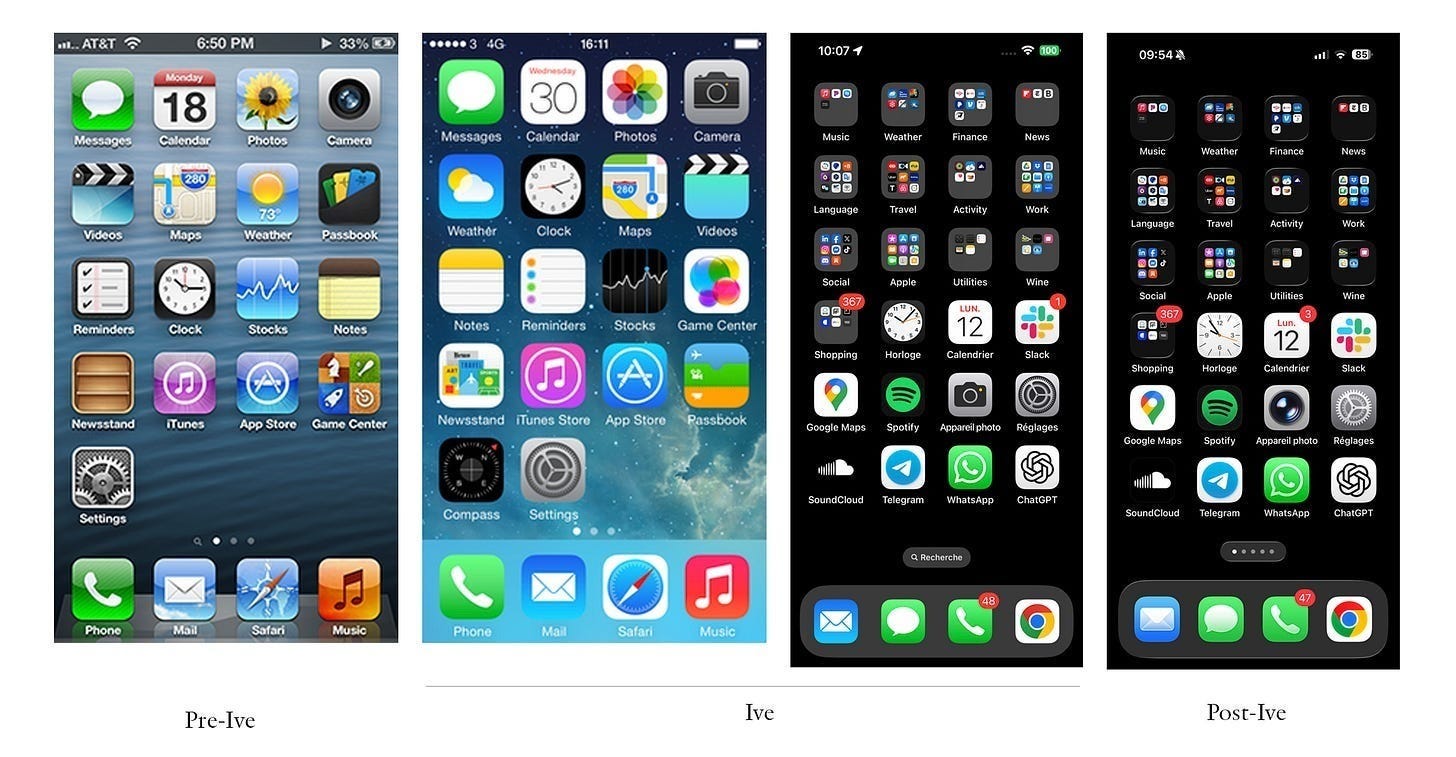
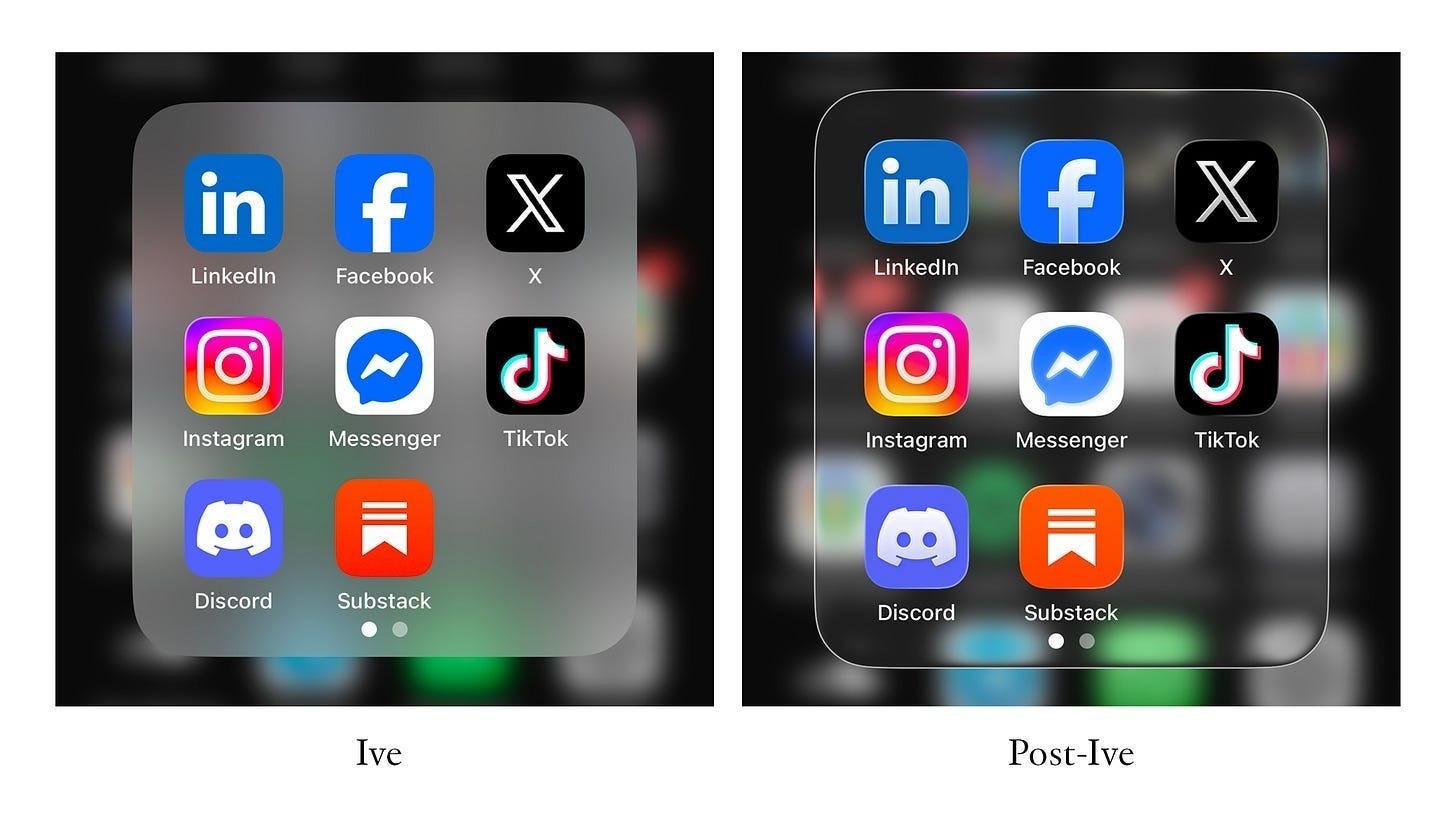
A comparable condition existed at Apple under Steve Jobs and Jony Ive. Design authority operated at the highest level of the organization, with direct executive access and unambiguous authorship over structure.

Ive’s authority extended beyond product form. It extended to software, packaging, retail environments, marketing materials, and the choreography of how products were encountered. The iPhone box was a choreographed sequence: reveal, organization, material transition from outer surface to product. At scale, this constraint system governed everything: OS design, retail environments, product renderings and photography, even the visual language of services.

The Pattern
Braun and Apple represent moments of rare alignment: executive literacy, protected authority, patience for long-term systems, and cultures willing to privilege coherence over immediacy. They are diagnostics: demonstrations of what becomes possible when authority aligns with capability. Durable identity emerges when the discipline capable of authoring structure holds authority over structure. The coherence these organizations achieved was architectural: constraint systems governing typography, proportion, motion, and interaction under real use.
The Inversion: How Authority Shifted
The design-led structure that produced durability at Braun and Apple was not invented by those organizations. It had a precedent, and the clearest documentation of what that structure looked like exists at IBM.
That alignment did not erode through incompetence or neglect. It was methodically replaced through institutional forces that repositioned design as subordinate function rather than governance discipline.
What Design Authority Was
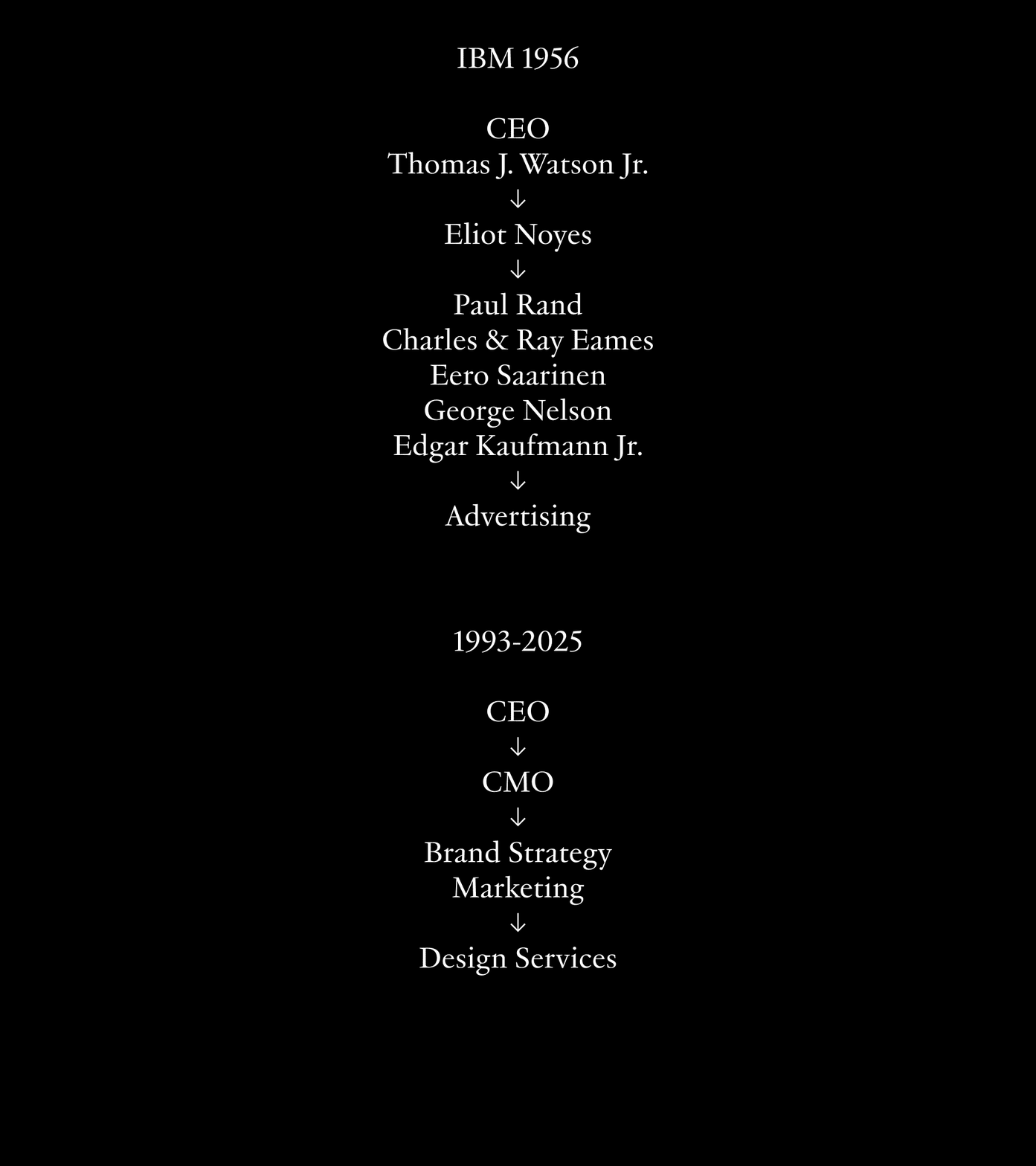
In 1956, Thomas Watson Jr., CEO of IBM, appointed architect Eliot Noyes as Consultant Director of Design, reporting directly to the CEO with authority over product, architecture, graphics, exhibitions, and corporate communications.¹ Noyes assembled a team of leading designers: Paul Rand for graphic identity, Charles and Ray Eames for exhibitions and films, George Nelson for interiors and office design, Edgar Kaufmann Jr. for curatorial oversight and design standards, Eero Saarinen for buildings. The design program was corporate wide and integrated.²
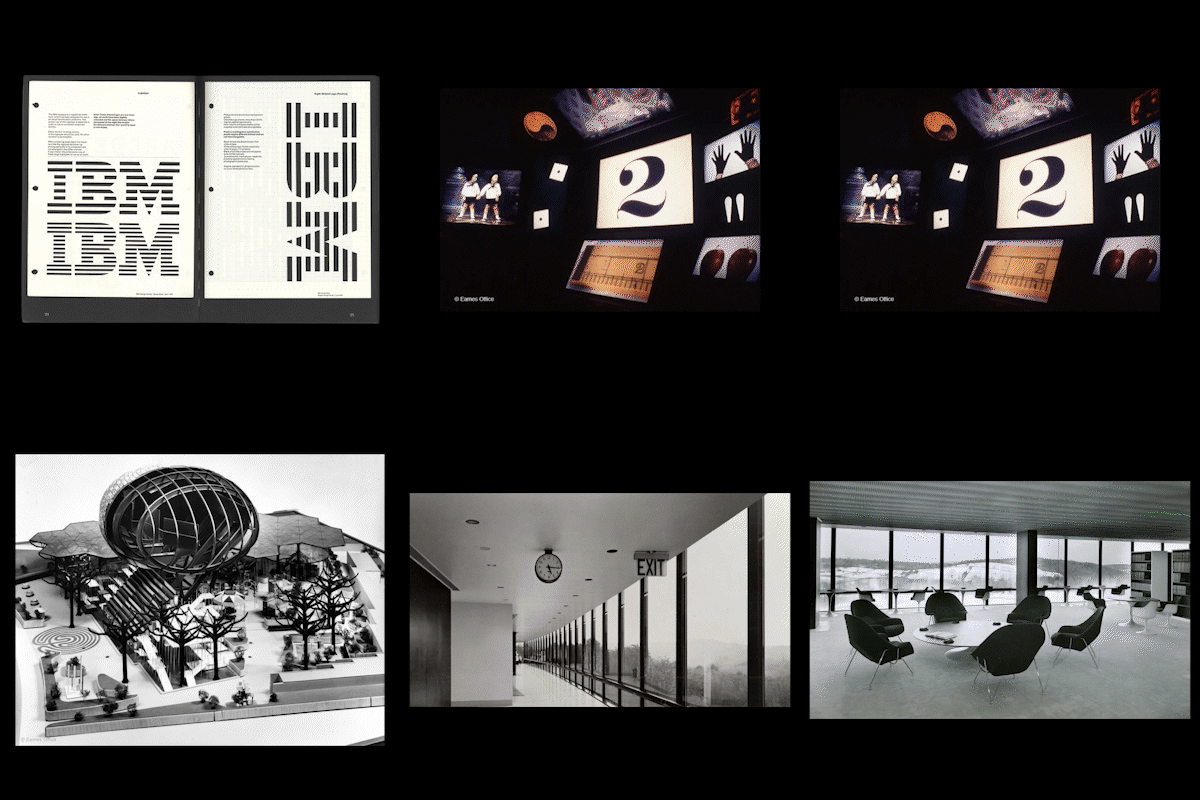
By 1973, Noyes held the title Director of the Department of Form and Advertising Design.³ The hierarchy was explicit: design governed advertising.
Watson’s mandate was clear: “Good design is good business.”⁴ Design was not about “packaging at the end of a process, it was a concern throughout everything that the company does.” The mission was to ensure “the best in modern design” across every touchpoint, not to create templates or brand guidelines.
Similar structures existed at Olivetti, Westinghouse, Mobil Oil, and Cummins Engine. Design leadership operated at strategic levels with direct executive access. These were not creative services departments. They were governance functions.
Design authority meant the power to refuse.
The MBA Transformation
Through the 1970s and 1980s, business education fundamentally reoriented corporate strategy around marketing.
Philip Kotler’s Marketing Management, first published in 1967, became the dominant MBA textbook by the 1980s. Michael Porter’s Competitive Strategy frameworks positioned marketing as the primary driver of differentiation and competitive advantage. Marketing was no longer “relegated to ad placement and market analysis”⁵; it became the language of executive decision-making.
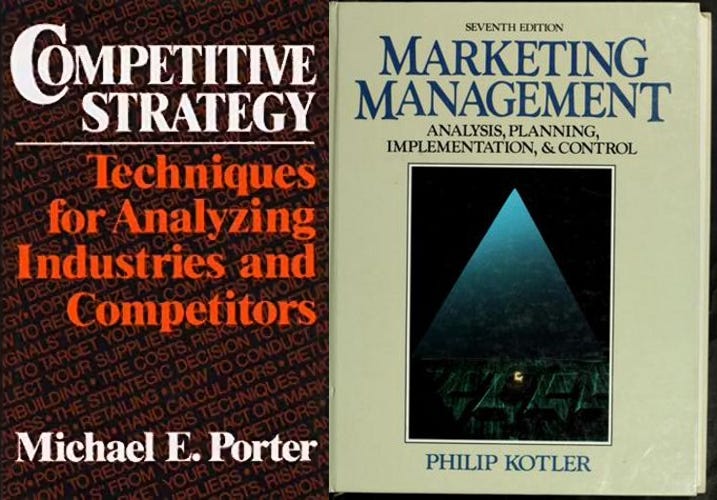
MBA programs trained a generation of managers to think in marketing terms: positioning, segmentation, brand equity, customer lifetime value. These frameworks were rigorous, quantifiable, and defensible to boards. They mapped cleanly to business outcomes that boards and CEOs could evaluate.
Design remained craft. Valuable, not strategic. MBAs learned to commission it, not author it. The evaluative vocabulary shifted decisively: organizations learned to assess competitive positioning while neglecting design systems. Marketing’s evaluative strength became design’s evaluative ceiling. What marketing could not assess, organizations could not approve.
Kotler himself describes the shift as progress:
“In the past, marketing was not part of the development of the product. It was only called in after the product was made. Then it was the marketers’ job to sell as much as they could. But now marketing participates in product development. Marketers can offer design ideas and features. Engineers are the masters of the possible, but it is marketers who can best assess value because they are better at understanding the customers’ criteria for buying a product.”⁶
Design is not absent from the sentence. It has been absorbed, treated as something marketers do, not something designers do. The claim is dubious. Understanding customer criteria does not confer the ability to author systems that perform under those criteria. A sommelier evaluates wine. They do not make it.
The CMO Consolidates Authority
In 1993, Coca-Cola created the Chief Marketing Officer title.⁷ By creating the CMO role, Coca-Cola institutionalized what had worked for its business model. In doing so, it established an organizational template that would be adopted indiscriminately across industries regardless of business type.
Through the 1990s, the CMO role became standard. Organizations consolidated budgetary control over all customer-facing activities under marketing leadership. This included identity. Design persisted as creative services: commissioned by marketing, subordinate to marketing, evaluated by marketing.
Where Noyes at IBM had governed advertising through design, organizations now governed design through marketing. Where Watson had positioned design as strategic infrastructure, organizations now positioned it as creative execution.
The average CMO tenure is 23 to 40 months, compared to seven years for CEOs.⁸ Long enough to commission a rebrand. Short enough to leave before it fails.
Brand Consultancies Productize Narrative
As marketing authority consolidated, brand consultancies adapted their offerings to what marketing leadership could purchase and defend.
Firms like Landor, Wolff Olins, and Interbrand had long worked on corporate identity. Their business models evolved significantly through the 1980s and 1990s. They productized deliverables that were legible to marketing hierarchy: brand pyramids, brand archetypes, purpose statements, tonal frameworks, brand manifestos.
These frameworks borrowed legitimacy from adjacent fields. Brand archetypes came from Jungian psychology, specifically from Margaret Mark and Carol Pearson’s 2001 book The Hero and the Outlaw, which applied Carl Jung’s archetypal theory to brand positioning.⁹ Brand pyramids adapted Maslow’s hierarchy of needs into a five-tier framework for brand identity.¹⁰ The language borrowed credibility from psychology and science. It could be presented, discussed, and approved within the decision-making frameworks marketing executives understood.
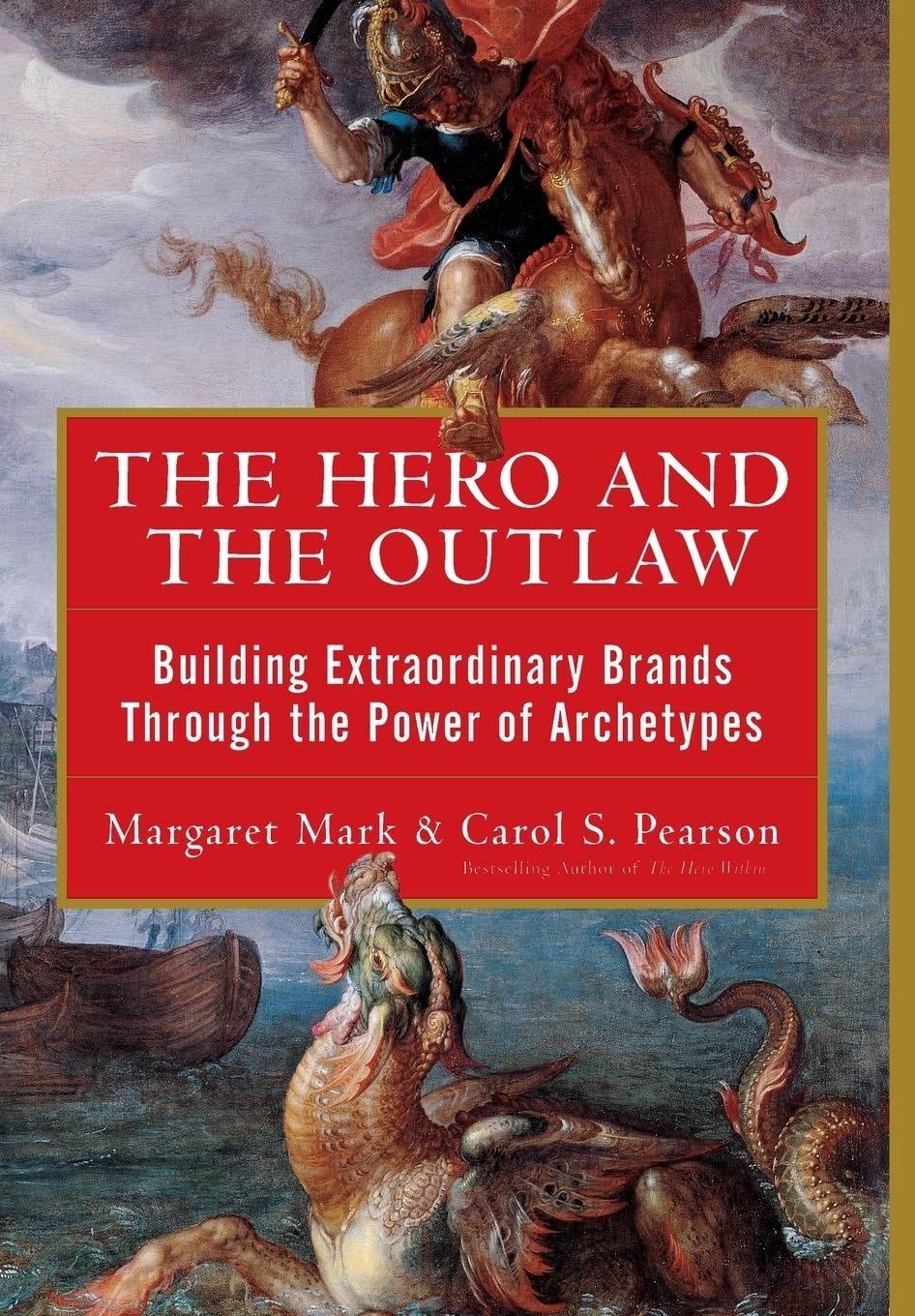
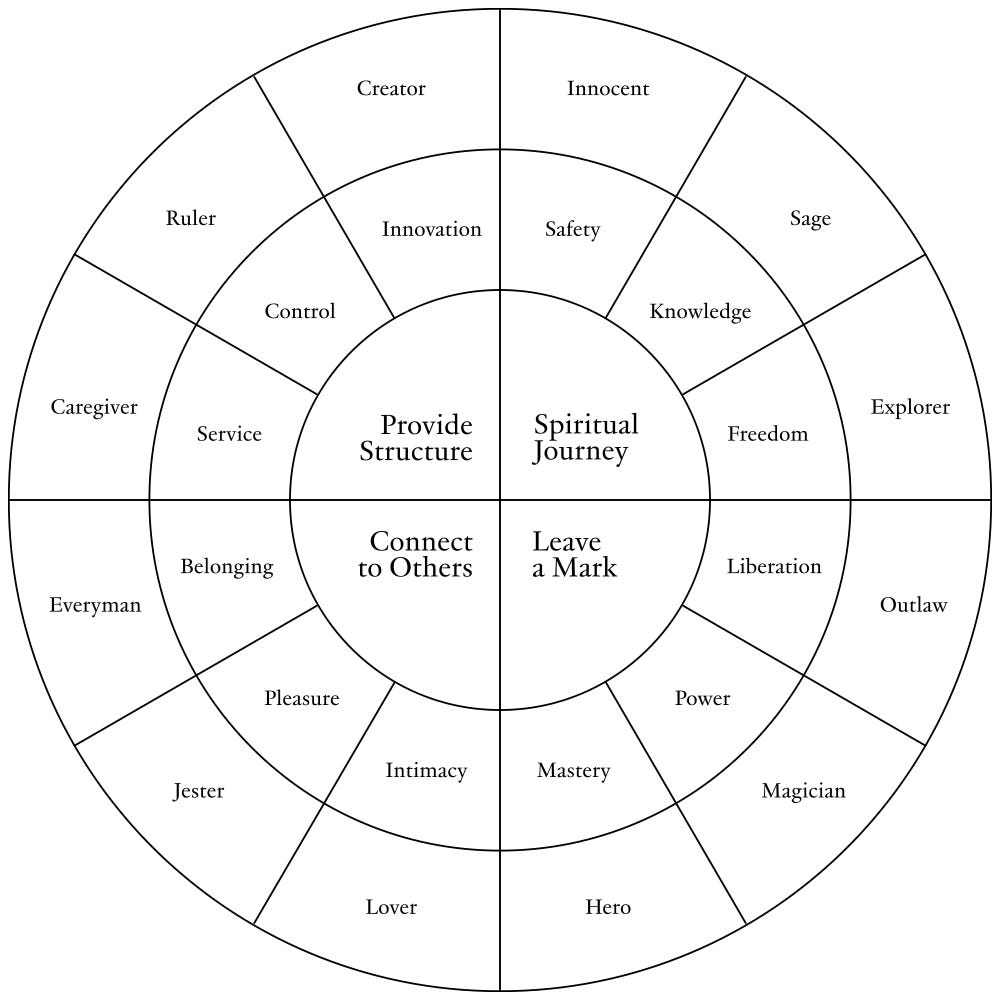
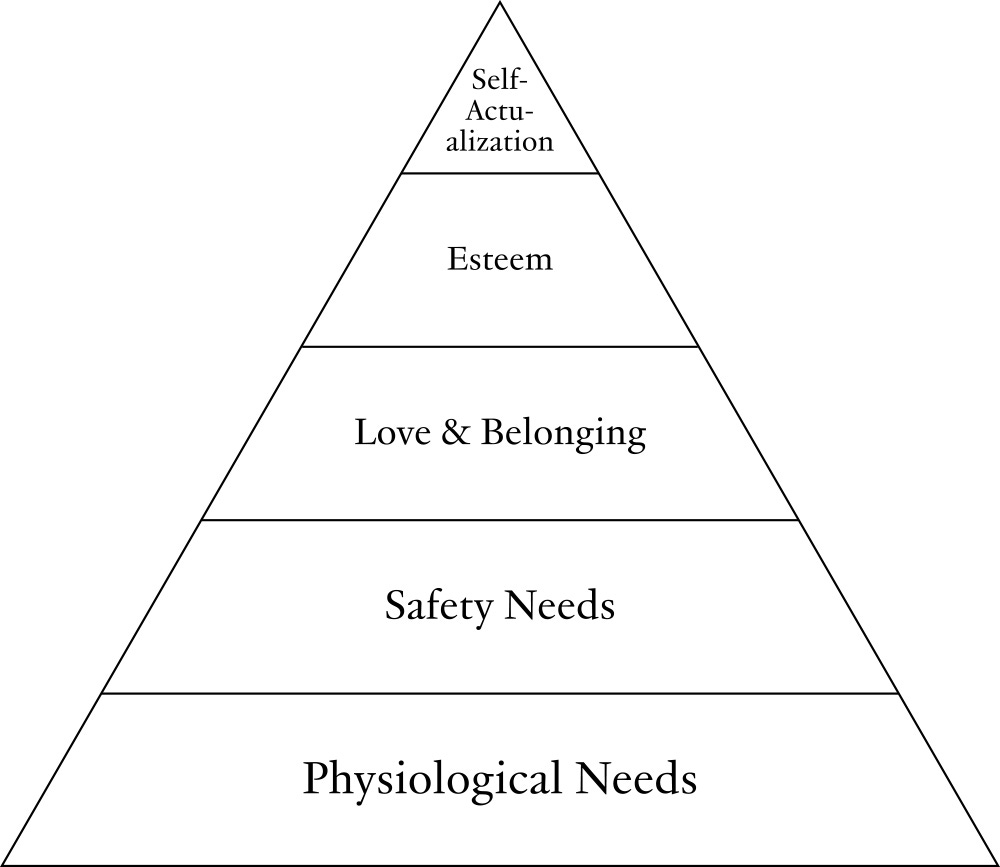
These frameworks solved a billing problem. Narrative strategy could be scoped, scheduled, and sold independently of execution. Whether it produced durable identity was irrelevant to the transaction.
Design received these abstractions and translated them into visual systems. Translation became negotiation. What does “Love & Belonging” look like at 12px? Which typeface expresses “the Sage archetype”?
Why It Persisted
The marketing-dominant structure persisted because it worked for the organizations that pioneered it.
Coca-Cola, Procter & Gamble, Unilever, Nike: these companies built durable identities under marketing authority because their business models aligned with marketing methodology. Simple products, identity through mass communication, recognition theater at scale. Marketing authority served them effectively.
The problem emerged when this structure became the default organizational model regardless of business type. The MBA-driven institutionalization of CMO authority established a marketing-dominant hierarchy not because it was optimal but because it was familiar.
Product-led technology companies, SaaS platforms, digital tools, and to a significant degree, physical product companies where design coherence across product lines is critical, inherited an inappropriate structure. The inversion persists in part because execution costs obscured evaluation failures. When producing identity is expensive, organizations assume expense reflects value. As execution becomes cheaper—through offshoring, templates, automation—the evaluation gap becomes visible. Organizations discover they have been approving work they cannot assess.
Product-led companies hired CMOs because that’s what companies do. They positioned design under marketing because that’s how org charts work. They purchased brand strategy from consultancies because that’s how identity is “supposed to be” developed.
In 2017, Coca-Cola itself briefly abandoned the CMO title, renaming the role Chief Growth Officer. Two years later, they reinstated it.¹¹ The company realized what it had always known: for a marketing-led business, marketing authority works. The identity of a chemically simple beverage, encountered primarily through advertising and cultural presence requires marketing excellence not structural authorship.
By then, the template had spread. Thousands of organizations operated under marketing-dominant hierarchy not because it served their needs but because it was institutionally familiar.
Power
Marketing leadership controls budget allocation, vendor relationships, and headcount. Identity work flows through marketing because marketing writes the checks. Redistributing authority to design means redistributing resources away from the function that currently holds them.
Executive incentives reinforce this. CMOs are evaluated on metrics marketing methodology can produce: awareness, engagement, conversion, brand sentiment. Structural coherence does not appear on the scorecard. New CMOs often trigger rebrands to establish their tenure, regardless of whether the existing system was working. A CMO who funds long-term typographic infrastructure over short-term campaign performance underperforms against their own evaluation criteria.
Design leaders rarely have organizational standing to contest this. They report into the function whose authority they would need to redistribute. Escalation requires executive alignment from leadership that often lacks the vocabulary to evaluate what design is asking for.
The result is self-reinforcing. Marketing controls resources. Resources flow to what marketing can evaluate. What marketing can evaluate is narrative. Narrative produces fragmentation in product-led organizations. Fragmentation is addressed through more resources flowing to marketing.
The cycle continues until the cost surfaces outside marketing’s own metrics: engineering velocity, product friction, system re-platforming.
This is the velocity tax of narrative-driven identity. Organizations pay it in meeting hours, revision cycles, and decision escalation. Systems built on ambiguous language require constant reinterpretation. Reinterpretation scales poorly.
The Product Complexity Observation
Not all businesses require the same organizational structure. The relevant question is not ‘what kind of company are you’ but ‘where does your identity bear load?’
Marketing-Led Businesses: Where Narrative Works
Companies like Coca-Cola, Nike, Liquid Death, Red Bull, McDonald’s, and Supreme build identity through exposure, repetition, and cultural presence. A logo, mascot, or symbol anchors the system. The products are simple enough that narrative functions as the governing structure. Marketing authority produces durable value because identity operates through the channels marketing controls.
Product-Led Businesses: Where the Crisis Emerges
The crisis emerges when this authority model is applied to product-led organizations. Companies like Figma, Notion, Stripe, Slack, Squarespace, or Linear build identity through product use. For software platforms, tools, and applications where customers interact daily, identity is infrastructure.
When product-led businesses subordinate design to marketing hierarchy, identity is governed by the wrong evaluative framework. Design systems fragment as product surfaces multiply. The organization funds another refresh cycle, not because identity changed, but because the original work delivered expressive assets, not structural rules. Marketing still matters in product-led organizations. It shouldn't govern.
The Gradient Between
There is a gradient of businesses between marketing-led and product-led: consumer electronics, furniture, automotive, airlines, hospitality, luxury goods with complex product lines. Companies like Braun, Dyson, Volvo, Leica, Lufthansa, or Muji where design coherence across the product line is critical but marketing still plays a significant role. Identity originates in the product and must hold across its digital representations: interfaces, apps, e-commerce. In these organizations, authority requires coordination between disciplines, not subordination of one to the other.
Why Now
Generative AI does not alter the organizational hierarchy described above. It makes its limits observable faster.
AI reduces the marginal cost of producing assets that meet narrative criteria at the quality band marketing methodology evaluates. Text, imagery, layout, campaign materials. Production becomes inexpensive at the threshold where surface plausibility and message alignment are sufficient. Evaluation remains expensive because it requires determining whether output will perform across conditions the generator cannot anticipate. Cost shifts from execution to governance.
For marketing-led organizations, AI exposes a different failure. Coca-Cola’s 2025 AI-generated Christmas ad, their second consecutive year using AI, met the criteria their internal methodology could assess: brand recognition, seasonal association, message alignment. It was approved. It shipped. The public response was severe: “soulless,” “devoid of creativity,” positive sentiment dropping from 23.8% to 10.2% after launch.¹³
For product-led organizations, the mismatch is structural. Marketing departments do not possess the criteria required to assess system performance: whether typographic systems will function at interface scale, whether motion communicates state across interaction sequences, whether design systems will adapt coherently as product surfaces multiply. AI output passes narrative approval while failing structural requirements the approvers cannot see. The volume of generated material expands faster than an organization’s ability to maintain coherence. Correction cycles lengthen. Each asset looks fine. The system falls apart.
AI compresses time by shortening the interval between misaligned authority and observable cost. The hierarchy remains unchanged. Failures arrive faster.
What’s Required
If identity is expected to function as infrastructure, the discipline capable of authoring that infrastructure must hold decision-making authority over how it behaves.
The organizational models that produced durability at IBM, Braun, and Apple reflected deliberate decisions about where authority should sit relative to capability. Those decisions protected coherence by granting design the power to impose constraint across systems.
Behavioral methodology evaluates identity through observable performance under conditions of use, not through narrative alignment. What this requires—and what the companion essay addresses—is a framework for authoring rules rather than assets.
Contemporary organizations face the same decision, faster. As execution becomes cheaper and systems become more complex, misaligned authority becomes visible sooner.
The organizational question is answered. Authority must sit with the discipline capable of evaluating what it approves. The methodological question remains: if narrative cannot govern behavior, what can?
Identity = Behavior follows.
-MP
Footnotes
¹ John Harwood, The Interface: IBM and the Transformation of Corporate Design, 1945–1976 (University of Minnesota Press, 2011). https://www.upress.umn.edu/9780816674527/the-interface/
² “IBM and the Transformation of Corporate Design,” Computer History Museum (June 3, 2024). https://computerhistory.org/blog/ibm-and-the-transformation-of-corporate-design/
³ Gordon Bruce, “Reflections on a Design Pioneer,” Fast Company, July 30, 2012. https://www.fastcompany.com/918753/reflections-design-pioneer
⁴ IBM, “Good Design Is Good Business,” IBM Heritage. https://www.ibm.com/history/inside-ibm
⁵ Kaihan Krippendorff, “17 Roles of the Chief Strategy Officer,” LinkedIn, July 18, 2022. https://www.linkedin.com/pulse/17-roles-chief-strategy-officer-kaihan-krippendorff
⁶ Philip Kotler and Alexander Chernev, “How Has Marketing Changed over the Past Half-Century?” Kellogg Insight, January 21, 2022. https://insight.kellogg.northwestern.edu/article/how-has-marketing-changed-over-the-past-half-century
⁷ “A Fetching New Title for the CMO,” American Marketing Association, January 22, 2024. https://www.ama.org/marketing-news/a-fetching-new-title-for-the-cmo/
⁸ Spencer Stuart, “CMO Tenure Study” (2020). https://www.spencerstuart.com/research-and-insight/cmo-tenure-study-progress-for-women-less-for-racial-diversity
⁹ Margaret Mark and Carol S. Pearson, The Hero and the Outlaw: Building Extraordinary Brands Through the Power of Archetypes (McGraw-Hill, 2001). https://www.amazon.com/Hero-Outlaw-Building-Extraordinary-Archetypes/dp/0071364153
¹⁰ Brand pyramid framework adapts Maslow’s Hierarchy of Needs into marketing structure with five tiers: core functionality, rational benefits, emotional benefits, personality, and brand essence. https://en.wikipedia.org/wiki/Maslow%27s_hierarchy_of_needs
¹¹ “A Fetching New Title for the CMO,” American Marketing Association, January 22, 2024. https://www.ama.org/marketing-news/a-fetching-new-title-for-the-cmo/
¹² Omnicom and Interpublic, “Omnicom to Acquire Interpublic Group,” PR Newswire, December 9, 2024. https://www.prnewswire.com/news-releases/omnicom-to-acquire-interpublic-group-to-create-premier-marketing-and-sales-company-302326075.html
¹³ CARMA media intelligence data reported by Marketing-Interactive, November 2025. https://www.marketing-interactive.com/coca-cola-s-2025-ai-driven-holiday-ad-draws-mixed-reactions
(Written by Mitch Paone. Editing assistance from Claude Sonnet 4.6 (Anthropic). All sources independently verified by the author.)