


Notes on Presence, Intuition, and Experimental Creative Practice: A Reflection on an Experimental Design Workshop
In most (Western) design schools, contemplative practices are absent from the curriculum. Meditation, mindfulness, and presence, rooted in Zen and other Eastern philosophies that entered the American landscape in the mid-20th century, have rarely been integrated into formal design education. Instead, programs emphasize critique, technique, and execution. What is often missing are practices that cultivate attention itself. Practices that ask how a person’s state of being, whether present, open, or embodied, shapes the creative process.
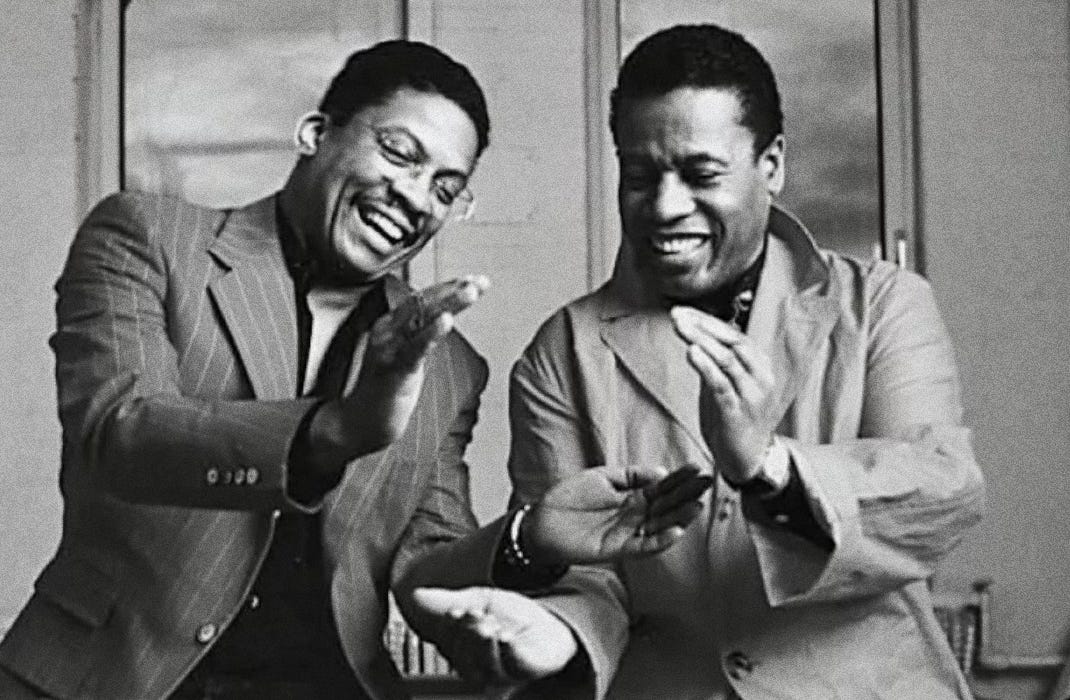
My connection to these ideas goes back more than 25 years, when I first took a Zen course at Loyola University New Orleans. Vividly, I remember my teacher, Ben Lee Wren, always saying, “You must move through time and space without stickiness!” I was 20 at the time, but that quote has certainly stuck with me! However, the real catalyst of these influences came from legendary jazz musicians like Herbie Hancock, Wayne Shorter, and, more recently, Brad Mehldau. These musicians, who drew inspiration from Buddhist and eastern traditions, introduced me to concepts that connect directly through their music, art, and approach to life. That influence has significantly shaped and impacted my own creative work, and ultimately, my approach to teaching.
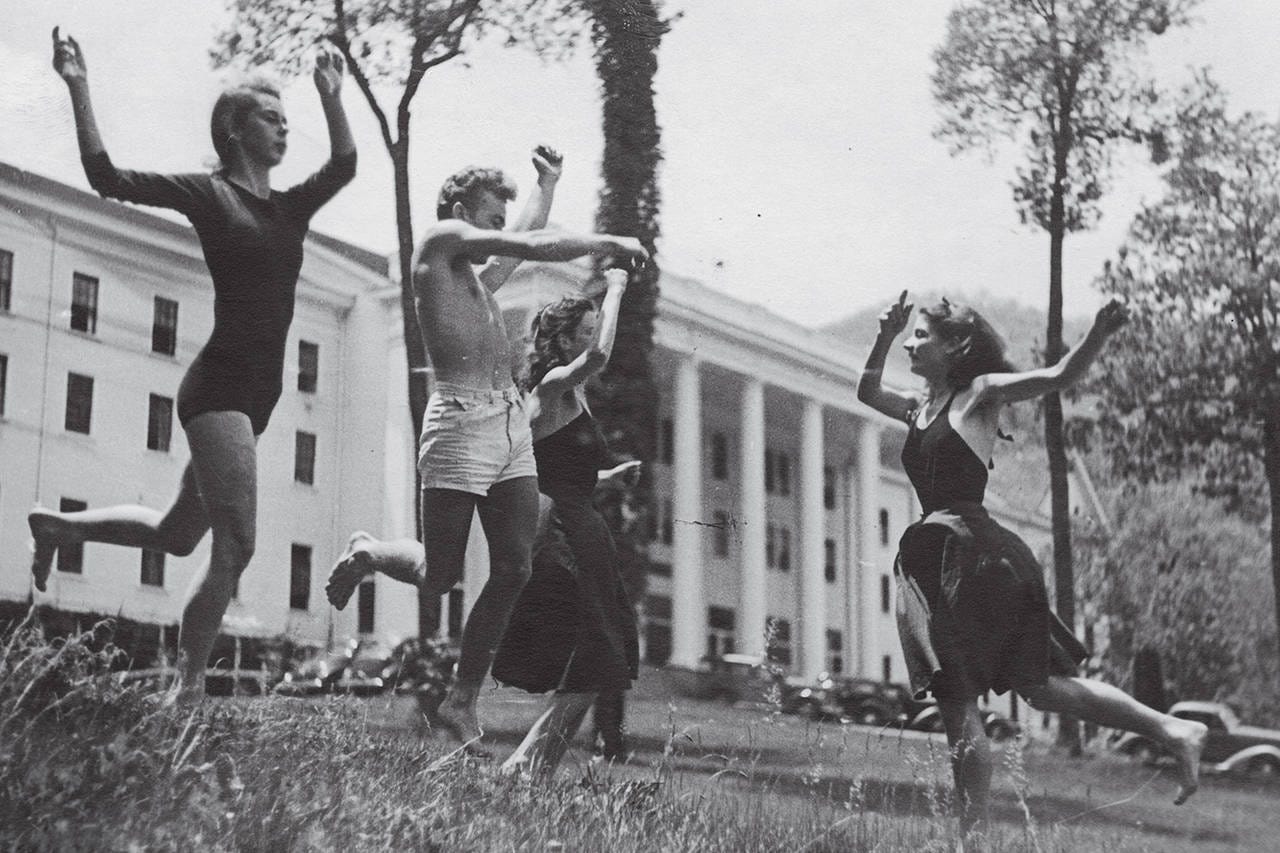
Black Mountain College
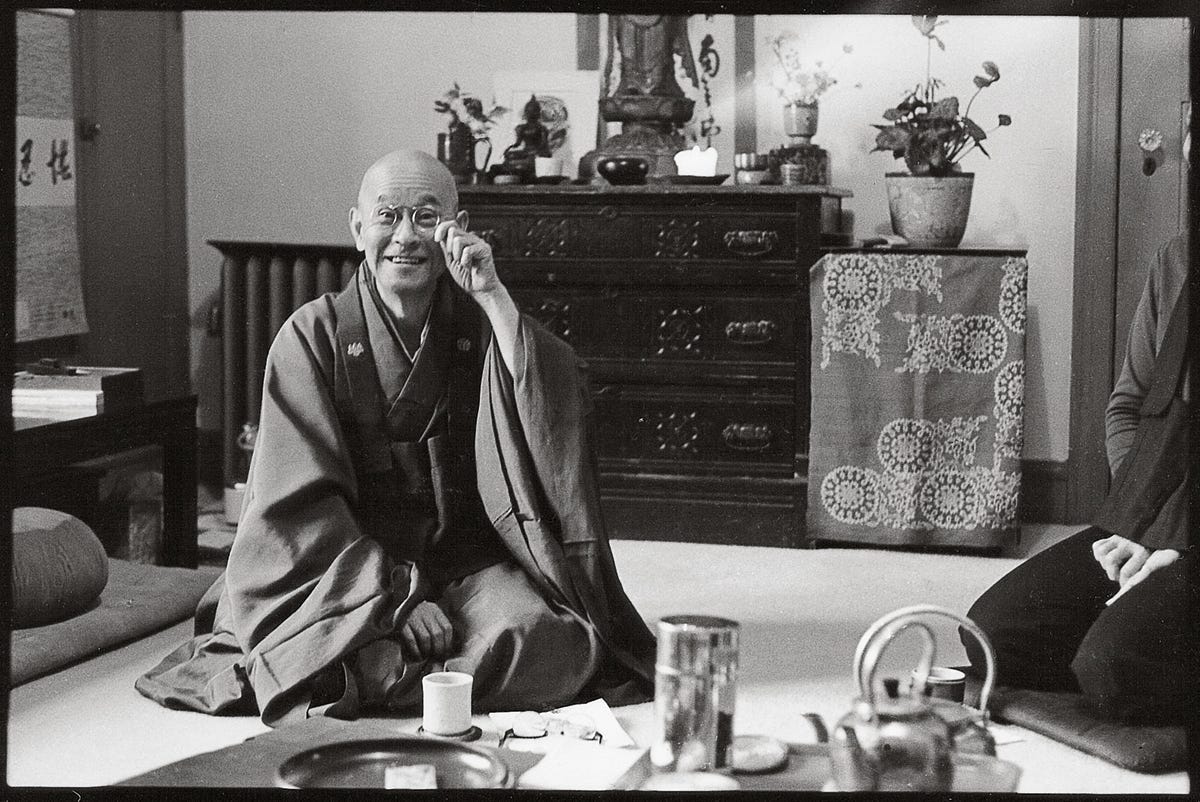
Black Mountain College may have been one of the few exceptions. Zen-inspired figures like John Cage, Merce Cunningham, and Robert Rauschenberg brought their sensibilities of silence, chance, and presence into the classroom and studio. Writers such as D. T. Suzuki and Alan Watts helped popularize Zen in the West, creating a cultural backdrop that linked artistic practice to states of awareness. Later, Shunryu Suzuki’s (not Rick Rubin!) call for a Beginner’s Mind, an attitude of openness, curiosity, and freedom from preconceptions, resonated with artists seeking to renew their creativity at its source. Considering the roster of artists and designers who passed through BMC, there must have been something serendipitous about it. Was it Zen? Or the infusion of the East?
Just to name a few: Josef and Anni Albers, John Cage, Merce Cunningham, Buckminster Fuller, Robert Rauschenberg, Cy Twombly, Ruth Asawa… (you get the idea).
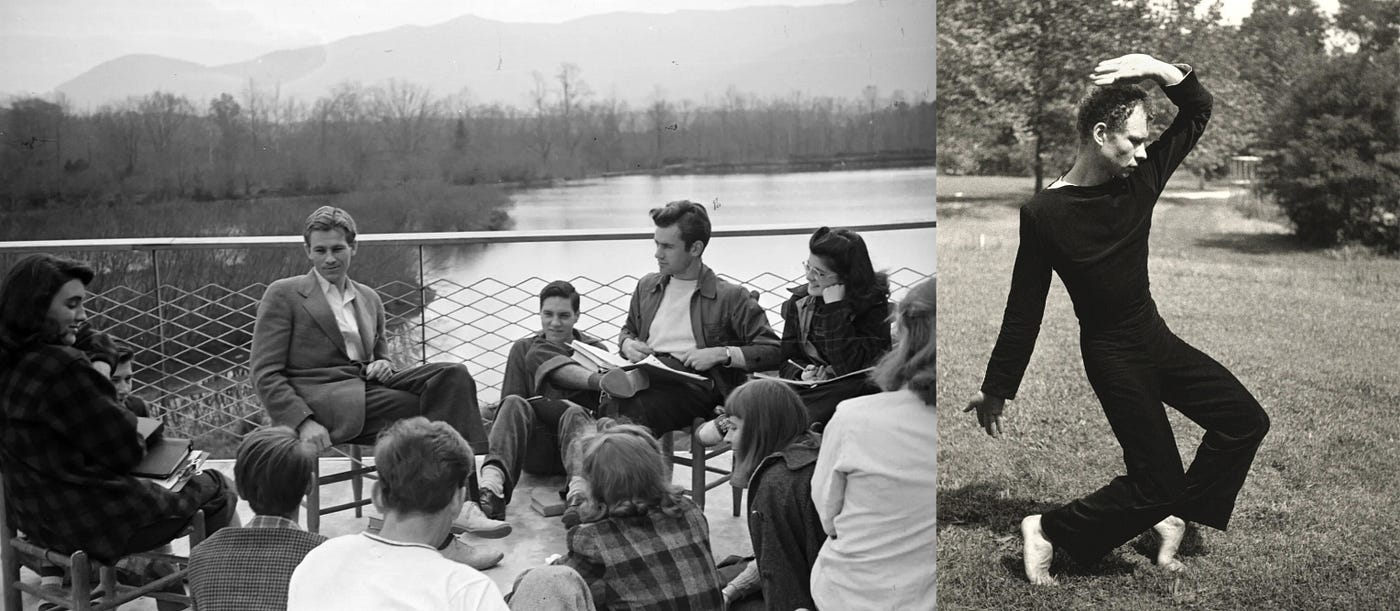
I’m not suggesting my workshops match BMC (far from it!), but I do see parallels in approach. By combining Eastern philosophy with BMC’s spirit, along with my musical sensibilities rooted in jazz, we can unlock new paths for creativity and reimagine how we teach design.
The Workshop
“Time is Form, Form is Time” was a week-long experimental workshop I conducted at HEAD–Genève during Semaine de toute possibilité (The Week of All Possibilities). Each day began with meditation, followed by drawing, rhythm exercises, group improvisation, invented languages, and collective performance. It wasn’t a traditional class but a temporary space to explore creativity as something dynamic, where groups could invent their own shared systems and bring them to life through live improvisation.
The phrase “Time is Form, Form is Time” (Which I’ve co-opted for the majority of my lecture titles) comes from a Zen teaching by Eihei Dōgen, the 13th-century monk who founded the Sōtō tradition. In his essay Uji (Being-Time), Dōgen presents time not as something external or linear, but as the shape of our being. Every gesture, breath, or sound is not in time; it is time.
“Time itself is being, and all being is time.” — Eihei Dōgen, Uji, c.1240
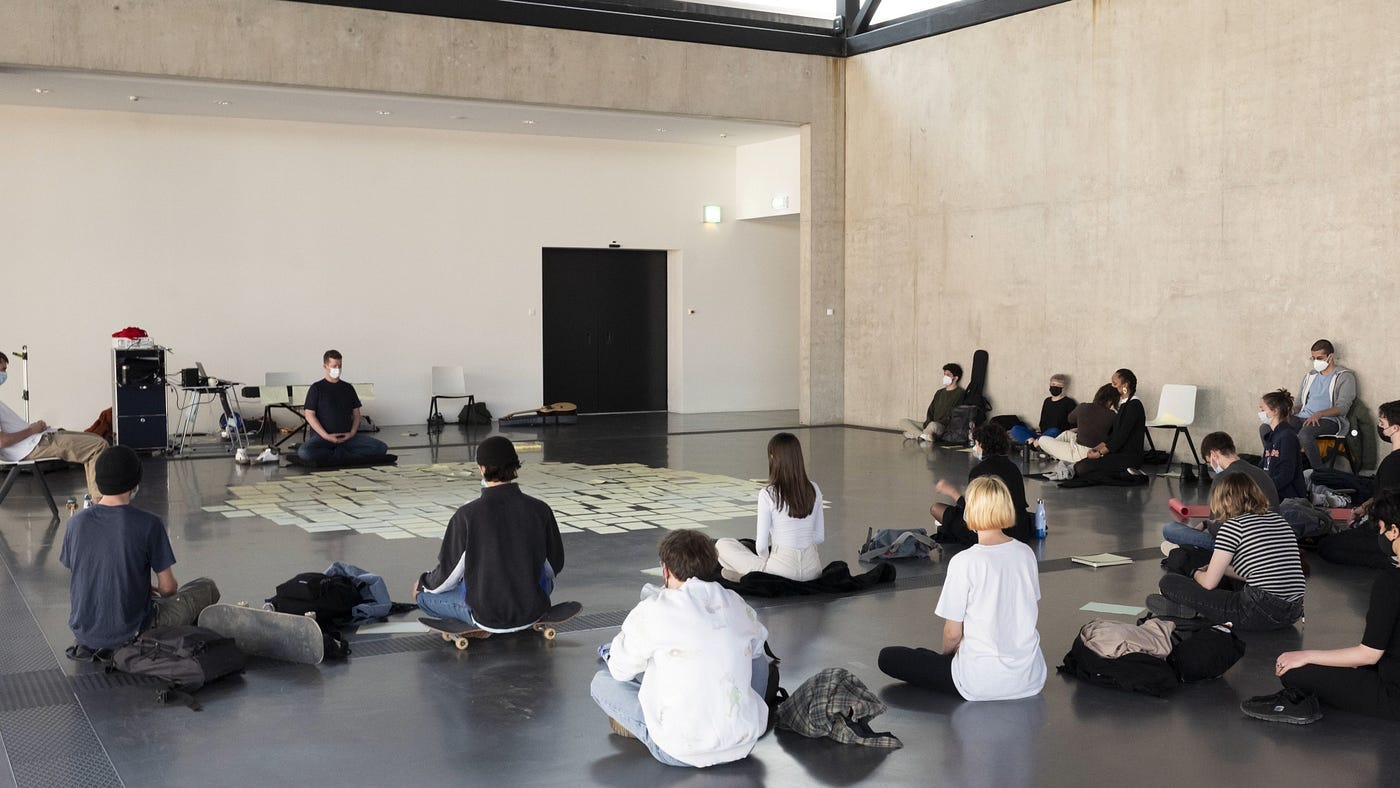
This was not abstract theory for us; it was a practical application. We began in silence, incorporated breath and rhythm into each exercise, and emphasized attention over outcome.
Intuition in Stillness
Each day opened with 30 minutes of zazen (Zen sitting meditation). We sat quietly, without goals or tech (no posture correction, no mindfulness app, just breath). Some students had sat before; for others, it was completely new, and yes, a bit awkward at first (I’m pretty half the class thought they’d signed up for a motion design workshop!).
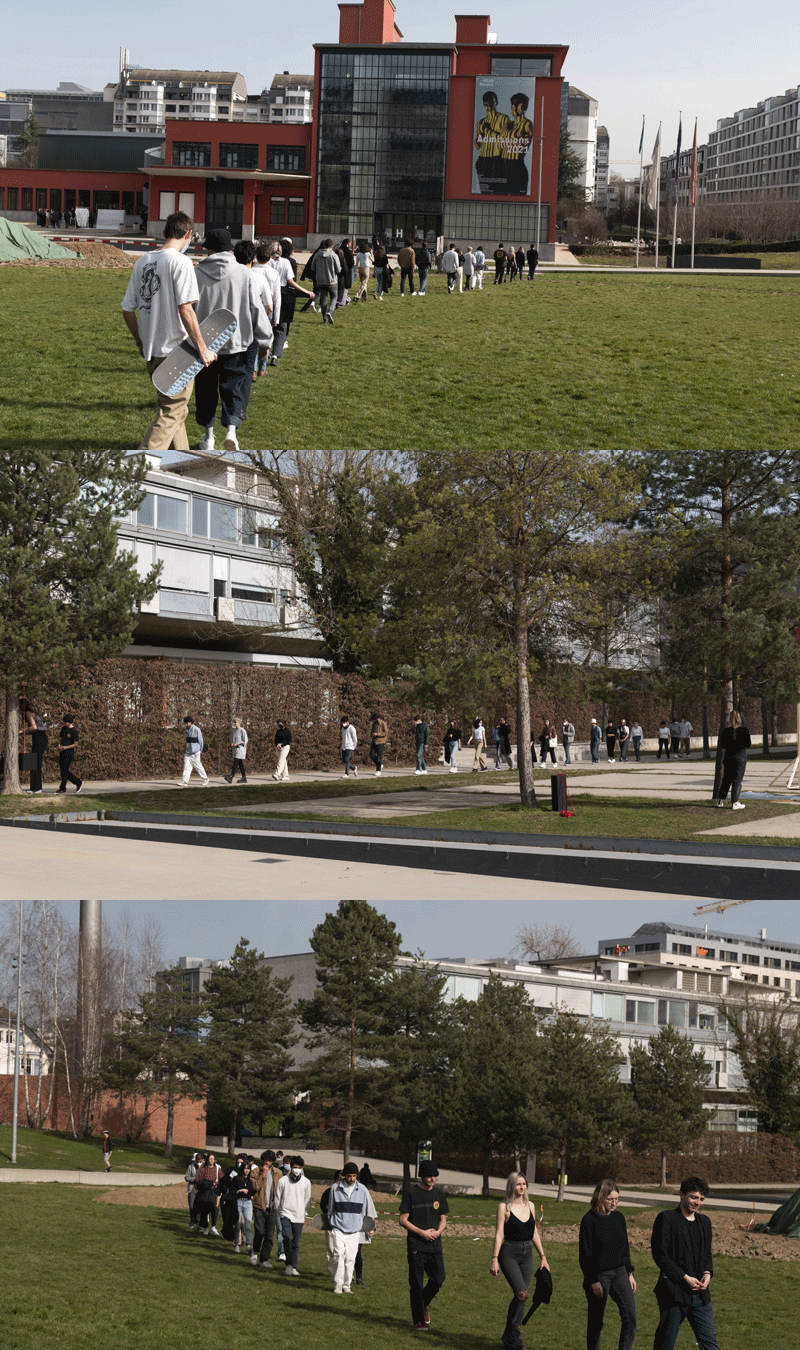
In the afternoon session of class meditation, we also practiced kinhin, or walking meditation, one step per breath through halls, stairwells, and open studios. At times, this was very public. It wasn’t performance, but it was visible. The invitation was to remain present, whatever the reaction. Curiosity, confusion, suppressed giggles from onlooking students.
These practices not only shift our focus but also transform our physical experience. Sitting, walking, breathing, or drawing mindfully engages creativity as a bodily process, one that arises through the body before being captured by thought. Daniel Kahneman, in Thinking, Fast and Slow, distinguishes between the rapid, intuitive ways we perceive and the slower, more deliberate reasoning processes. Creative practice depends on both, but it is often the embodied and instinctive mode that ignites inspiration before analysis or judgment can take over.
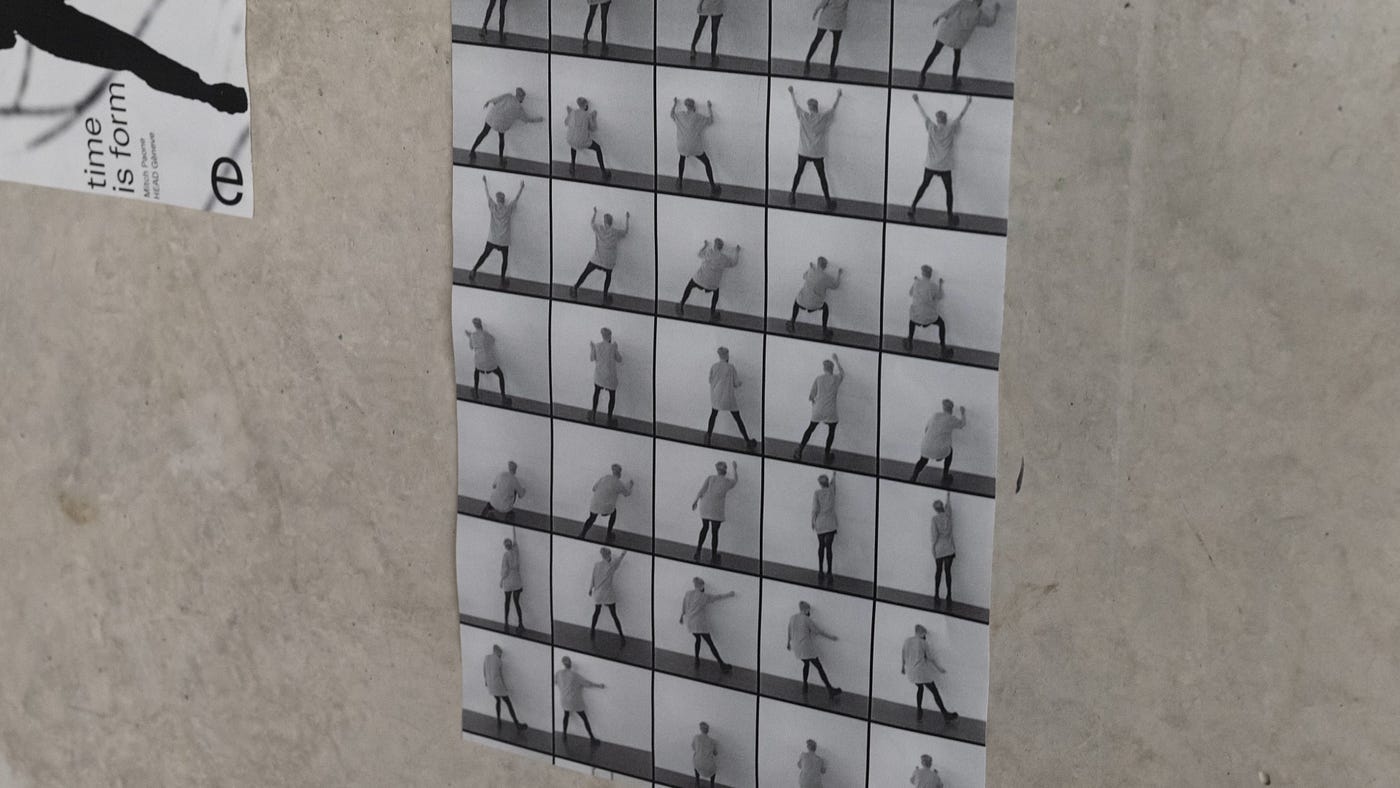
Intuition is the immediate, felt sense of something before it is dissected by rational thought or critique. This is central to somatic traditions in music, dance, and performance, where learning begins with sensation and movement rather than abstraction. It also shaped this workshop, drawn from my own experience as a jazz pianist, where you quickly discover that sometimes the body knows before the brain does (and often has better ideas). ei. Follow your gut, or play what you “feel”.
For design students, this perspective offers a reorientation. Typography, image-making, and form construction are not separate from how the body inhabits time, space, and rhythm. Presence is not only mental; it moves through breath, posture, attention, and relation.
Drawing Breath
The drawing exercises were simple. Repetitive. Quiet. Some with a metronome, some with spoken rhythm, some in silence. Often, breath itself was the timing device.
One example:
— Inhale, lift the pen
— Exhale, draw a line
— Repeat for five minutes
— On beat with a metronome
Another variation:
— Eyes closed
— Inhale, draw a vertical line
— Exhale, draw a horizontal line
— Repeat without stopping
One more:
— Assign a simple shape to each sound (clap = circle, foot kick = square)
— Teacher performs a sequence of claps and kicks with a metronome
— Students draw the sequence, leaving negative space for silence
— Student then performs this piece but using a different sound for each shape
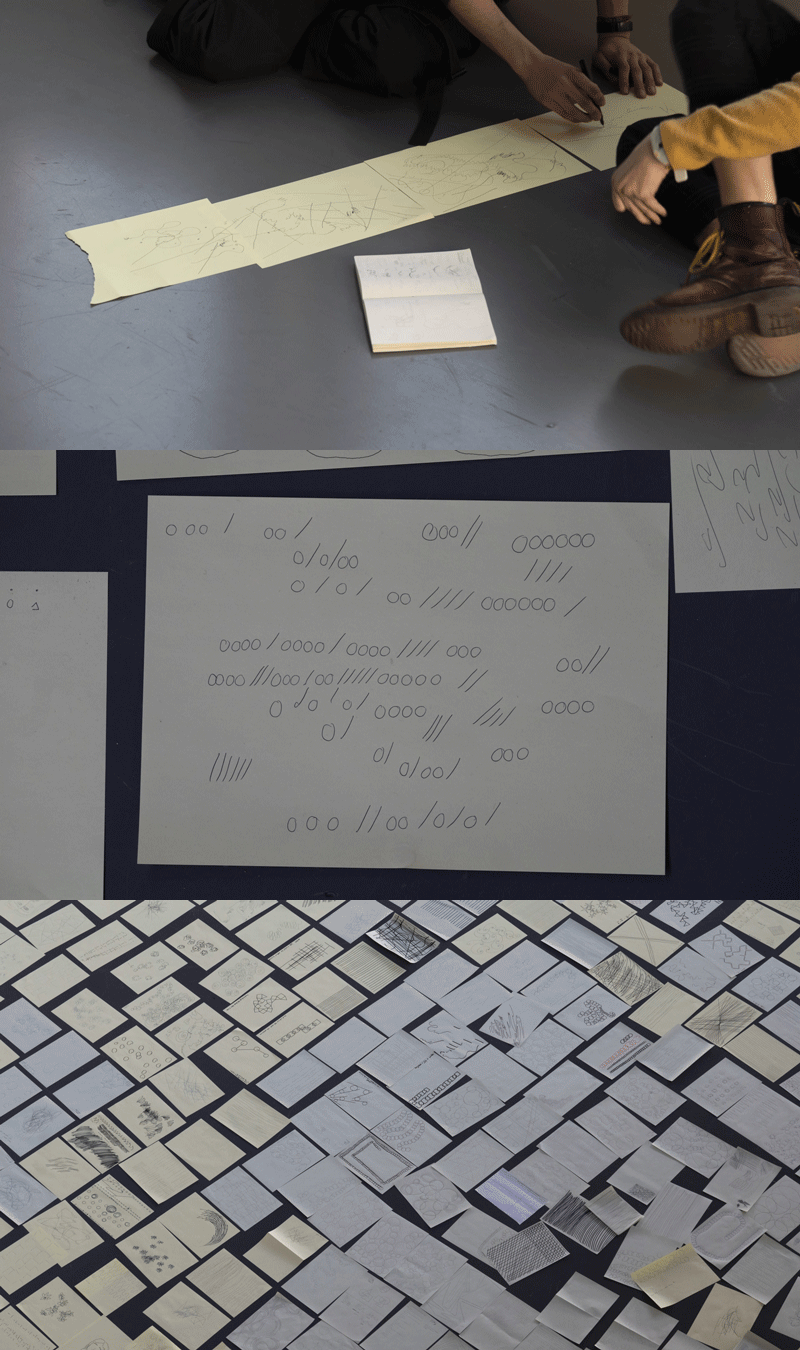
These exercises emphasized surrendering to a rhythm without ownership, focusing on trusting the process rather than the outcome. Influenced by Pauline Oliveros’ Deep Listening and John Cage’s indeterminacy, they followed generative rules that echo Sol LeWitt’s view of art as the unfolding of an idea through process rather than the assertion of the artist’s will.
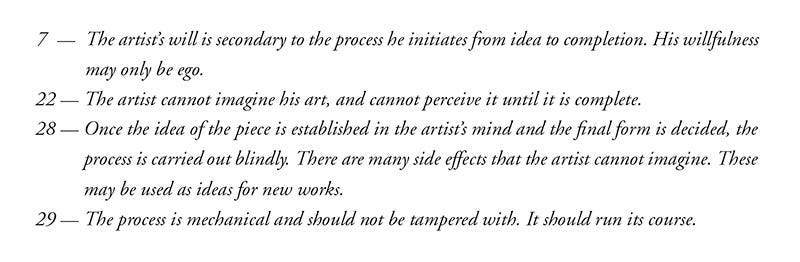
Similar to those artists, we worked with scores, structures, and rules that revealed rather than restricted. Each prompt created space to notice how attention shifts, how thought becomes gesture, and how rhythm can emerge from stillness or silence. The beauty of this practice lies in the surprise of the outcome; it is not forced. In a way, this is a precursor to “Generative Design” but done in a meditative format.
Form, Sound, Body
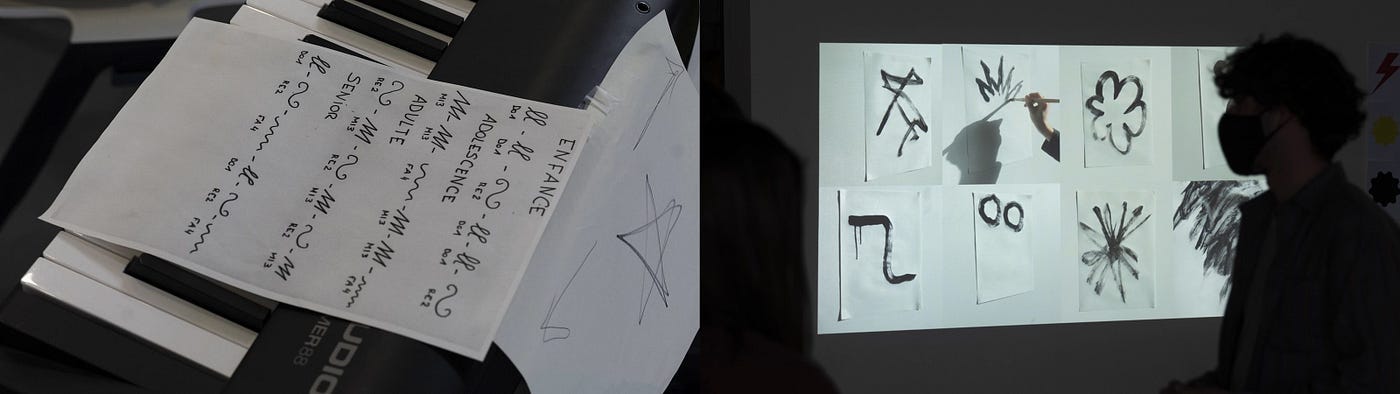
Midweek, the focus shifted to sound and language. Students broke into groups and developed their own systems of communication, nonverbal, intuitive, improvised. These “languages” might include tone, movement, drawing, repetition, or gesture. Some were expressive, others minimal. All were built collectively through play and repetition.
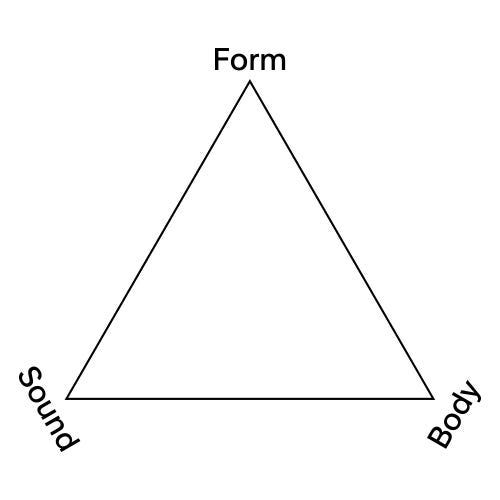
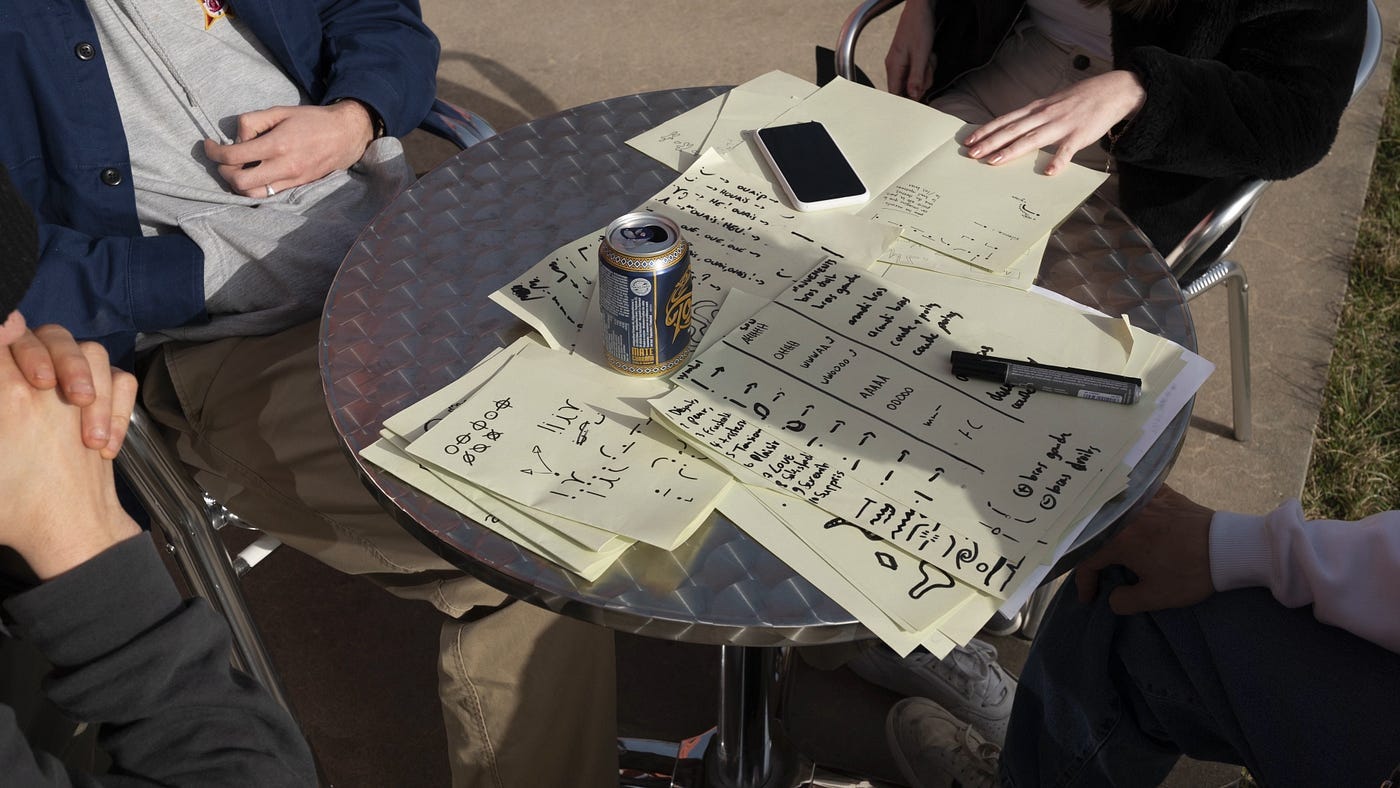
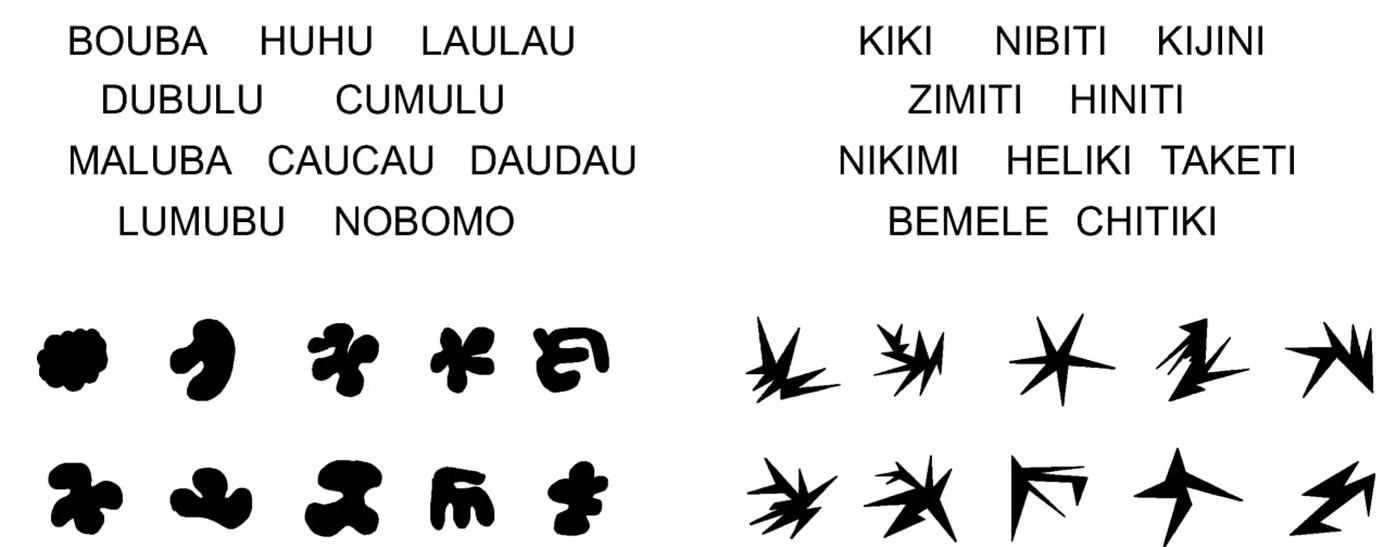
Theories like the Bouba/Kiki effect and ideasthesia emphasize the sensory links between sound and shape. This experience was more than theory; it was a foundation for performance. You could feel the groups shift from hesitation and confusion to the being of a shared language.
Certain shapes began to carry emotional weight. A sharp line might feel angry. A soft curve, comforting. Some sounds seemed to express joy, others sadness, tension, fear, or curiosity. Rhythm became a kind of empathy. Meaning emerged not through explanation, but through resonance. A shared recognition of basic human feeling made visible and audible.
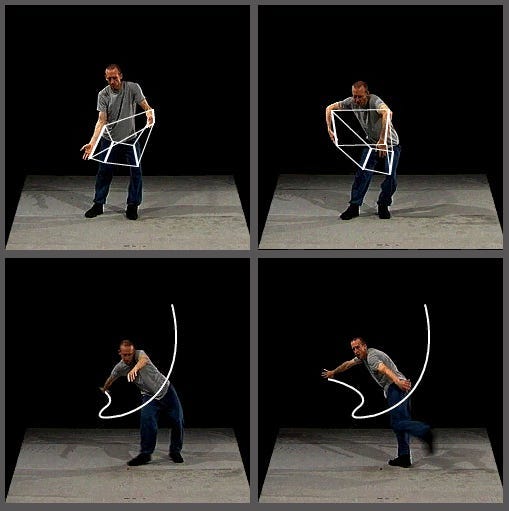
This part of the workshop was also inspired by William Forsythe’s movement practices, where choreography develops from spatial prompts, encouraging students to “feel” form.
The Courage to Be Ridiculous
Let’s be honest. Some of this may sound absurd, and that is the point!
Consider activities like making random noises, drawing with your eyes closed, or walking step by step through a crowded hallway while trying to avoid distractions. These are not sophisticated artistic techniques. They are invitations to let go of self-consciousness, be open, and take risks.
This is where creativity flourishes. When the pressure to be correct is replaced by the permission to be ridiculous, a transformation takes place. People begin to trust themselves and start to listen, feel, and loosen up.
Collective Composition
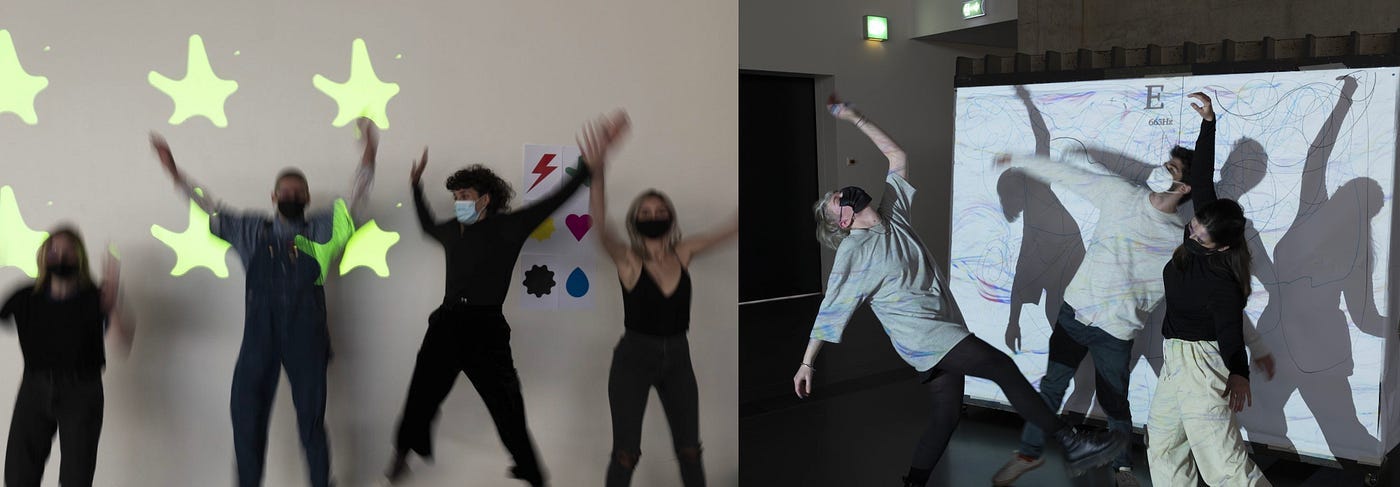
At the end of the week, each group performed its language live. There were no strict rehearsals, no fixed rules, just a shared agreement to step into the unknown together. Some performances were quiet, almost meditative. Others were chaotic, ceremonial, even absurd. Many shifted in tone from moment to moment.
Despite the differences, what held them together was not technique or polish but presence. Each team had developed its own structure and language, and each performance was a true improvisation.
What struck me most was the vulnerability on display. There was no posturing, no need to impress, just a willingness to be seen. At times, the room grew still in a way that felt rare, as if everyone recognized a moment of genuine connection. Coming not long after the pandemic’s isolation, students seemed hungry for this. They were less guarded, more willing to let go of self-consciousness, and more open to sharing space without pretending.
The Courage to Teach Differently
Looking back, this work is an exploration of form, sound, and rhythm, and their relationship to the body, as well as part of a larger shift in how we approach teaching creativity and design. I’ve lectured on these ideas for years, but it is in the workshop space, when people are actually immersed, improvising, and experimenting together, that the ideas really come alive.
In a culture where speed often supersedes depth and where (online) curated identities hinder vulnerability, these practices offer something distinct. The aim here isn’t mastery or polish. It is presence, process, and the courage to be open. Just as importantly, it is about trusting intuition: the first gesture, the half-formed sound, the instinct that arrives before analysis. These practices give students permission to act without certainty, to recognize that creativity often begins with impulse. In doing so, they build confidence to take risks and be creative, even if it may seem ridiculous.
Black Mountain College remains a powerful reminder of what can happen when education makes room for diverse traditions, when art, philosophy, performance, and even psychology are allowed to intersect and inform one another. The exercises I brought to this workshop, like zazen, somatics, jazz improvisation, and drawing with breath, did not originate in design pedagogy. They were borrowed, translated, and reimagined for this context. To insert some unfamiliar and unexpected fresh energy into the students
There is an urgency here. We want to unlock creativity in everyone, not just the so-called talented few. To achieve this, we need more cross-pollination, more interdisciplinarity, and more space for practices that originate from elsewhere. And perhaps more importantly, we need spaces where people can risk being vulnerable, because vulnerability is what makes empathy possible. What emerged in this workshop was not only creativity, but also a glimpse of how trust and connection can be cultivated when we let go and leap into the unknown. By the end of the week, it was clear the students were more open, more connected, and more willing to share space together.
What might design education look like if attention, intuition, presence, and empathy were taught as rigorously as critique and execution?
-MP
Reference & Reading List and Additional Research
Zen & Contemplative Practice
Eihei Dōgen — Uji (Being-Time)
Shunryu Suzuki — Zen Mind, Beginner’s Mind
Dainin Katagiri — Each Moment is the Universe
Chögyam Trungpa — Cutting Through Spiritual Materialism
John Daido Loori — The Zen of Creativity: Cultivating Your Artistic Life
Sound, Art, Improvisation
Pauline Oliveros — Deep Listening: A Composer’s Sound Practice (via Deep Listening Institute)
John Cage — Silence: Lectures and Writings
Brian Eno — Oblique Strategies
William Forsythe — Improvisation Technologies
Merce Cunningham — Chance Dance & Philosophy
Hannah Higgins — Fluxus experience
Viola Spolin — Improvisation for the Theater
Joseph Beuys — Social Sculpture Concept
Sol Lewitt — Sentences on Conceptual Art. 1968
Herbie Hancock & Wayne Shorter — Reaching Beyond: Improvisations on Jazz, Buddhism, and a Joyful Life
Cognition & Embodied Language
Daniel Kahneman — Thinking, Fast and Slow
W. A. Mathieu — The Listening Book: Discovering Your Own Music
Sound Symbolism & Ideasthesia Research
V. S. Ramachandran & Edward Hubbard — Cross-modal mappings in synesthesia
Danko Nikolić — Ideasthesia and perceptual meaning